Greyhound Racing Rules UK: Official GBGB Regulations Explained
 Available in US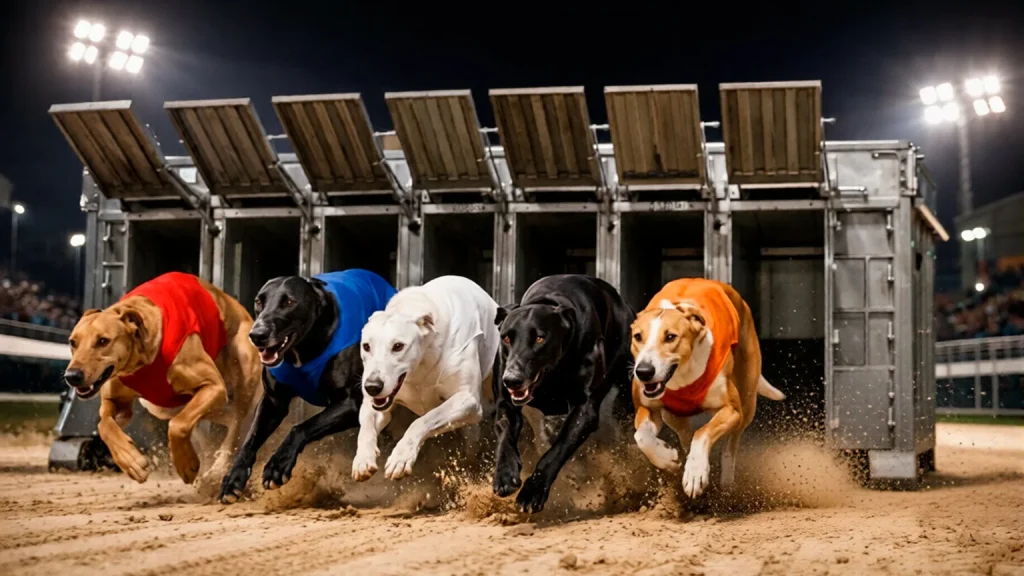
British greyhound racing operates under formal rules that govern everything from how races start to what happens when dogs interfere with each other. Understanding these regulations illuminates why certain decisions get made and what constitutes fair competition. The rules exist to protect both the sport’s integrity and the welfare of the greyhounds themselves. The wider context is set out in our guide to watching UK greyhound racing.
The Greyhound Board of Great Britain oversees licensed racing, maintaining standards that apply uniformly across all regulated tracks. This centralised authority ensures consistency, so races at Nottingham follow the same principles as races at Belle Vue. Trainers, owners, and tracks all operate within the same framework.
This guide explains the key rules that affect what viewers watch and bettors wager on. From grading systems that match runners by ability to interference rulings that can change results, the regulations shape competitive outcomes in ways worth understanding.
GBGB as the Regulatory Body
The Greyhound Board of Great Britain regulates licensed racing across England and Wales. This organisation sets the rules, licenses tracks and trainers, maintains greyhound registrations, and enforces standards throughout the sport. The 18 GBGB-licensed stadiums all operate under its authority.
Mark Bird, GBGB Chief Executive, has spoken about consolidating welfare initiatives and embedding improvements across the sport. This regulatory approach combines competitive oversight with animal welfare responsibilities, recognising that sustainable racing requires both fair competition and proper care for greyhounds.
Licensing covers multiple categories. Tracks must meet facility standards and operational requirements. Trainers must demonstrate competence and maintain proper kennels. Racing officials must pass examinations and maintain certifications. This layered licensing creates accountability at every level.
Regulatory visits increased significantly, with kennel inspections rising 73.2% since the welfare strategy launched in 2022. These unannounced and scheduled visits verify that licensed participants maintain standards between formal reviews. The inspection regime creates ongoing accountability rather than relying solely on initial licensing.
Rule changes go through formal processes. The GBGB consults with industry stakeholders before implementing significant modifications. This deliberative approach ensures changes reflect practical realities rather than theoretical ideals. The resulting rules balance competing interests while maintaining clear enforceable standards.
Race Procedures and Grading
The grading system matches greyhounds by ability to produce competitive races. Grades range from A1 at the top through to A11 at lower levels, with additional categories for open races and special events. A greyhound’s grade depends on recent performance, with winners typically moving up and poor performers moving down.
Grading calculations consider winning times relative to track standards. Each venue publishes standard times for different distances, and greyhounds are assessed against these benchmarks. Consistent winners at one grade eventually qualify for promotion to higher competition.
Trap draws follow randomised procedures to prevent manipulation. Race officials assign starting positions through methods that trainers cannot influence. This randomisation ensures all runners face equal chances regarding positional draws, with any trap biases affecting everyone equally over time.
Pre-race procedures include identity verification. Greyhounds carry microchips that officials scan before racing. This check confirms the entered dog matches registration records, preventing substitution that could affect betting integrity. Weight checks also occur, with significant variations from registered weights requiring explanation.
Trial runs allow greyhounds to test track conditions before formal racing. These timed performances help trainers assess fitness and help racing managers evaluate where dogs should grade. Trials do not carry prize money or betting markets but contribute essential data for grading decisions.
Withdrawals and reserves follow defined protocols. When entered greyhounds cannot run, reserves from standby lists may substitute. Rules specify how late withdrawals affect trap assignments and whether betting refunds apply. Understanding these protocols explains why race fields sometimes differ from early announcements.
Interference and Fouls
Racing involves close-quarters competition where contact between greyhounds occurs regularly. Rules distinguish between incidental contact that does not affect outcomes and interference that disadvantages competitors. Stewards review incidents after each race to determine whether any action is warranted.
Crowding occurs when greyhounds bunch together, typically approaching bends. Runners on the inside may be squeezed against rails while wide runners may force others off their intended line. When crowding clearly affects finishing positions, stewards can impose sanctions ranging from warnings to disqualifications.
Bumping describes direct contact that knocks a greyhound off stride. Accidental bumps during normal racing rarely attract penalties unless they cause falls or clearly cost places. Persistent bumpers may face suspension from racing until their running style improves.
Checking refers to a greyhound being forced to slow down by another’s actions. A runner who checks because of interference may have finished better without that impediment. Stewards assess whether checking changed results when deciding on adjustments.
Fighting during races results in serious consequences. Greyhounds who attack others demonstrate behaviour incompatible with competitive racing. Such incidents typically lead to bans and mandatory retraining before any return to licensed competition.
Steward inquiries occur immediately after problematic races. Officials review camera footage from multiple angles, consult with racing judges, and reach decisions about whether results should stand. Amended results affect betting settlements, with adjusted placings determining payouts.
Penalties and Enforcement
Penalties range from minor cautions to permanent bans depending on violation severity. The GBGB publishes guidelines that specify typical sanctions for common infractions, though individual circumstances allow discretion. This structured approach creates predictability while accommodating unusual situations.
Greyhound suspensions remove dogs from competition for specified periods. A greyhound suspended for interference cannot race at any licensed track until the suspension expires. Trainers must declare suspensions when entering other races, and tracks check suspension registers before accepting entries.
Trainer penalties affect entire kennels in some cases. Serious welfare violations or repeated rule breaches can result in license revocations that prevent any greyhound under that trainer’s care from competing. This collective consequence creates strong incentives for kennel-wide compliance.
Financial penalties accompany many violations. Fines proportionate to offence severity and participant resources create economic deterrence alongside sporting sanctions. Prize money may be withheld pending inquiry outcomes when results remain disputed.
Appeals processes exist for those who contest penalties. Formal hearings allow presentation of evidence and argument before independent panels. This procedural fairness protects against arbitrary decisions while maintaining the credibility of enforcement outcomes.
Understanding Rules Enriches Viewing
Knowing the rules transforms how you watch greyhound racing. Steward announcements become comprehensible rather than mysterious. Grading movements explain why familiar dogs appear in different company. Interference decisions make sense when you understand the criteria stewards apply.
Bettors particularly benefit from rules knowledge. Understanding when results may be amended affects whether you celebrate early. Knowing grading patterns helps predict future racing opportunities. Recognising procedural requirements explains scratching and withdrawal patterns.
The rules exist to protect fair competition and greyhound welfare simultaneously. Neither goal can succeed without the other, as a sport that mistreats its athletes cannot sustain public support regardless of competitive integrity. This dual purpose shapes the entire regulatory framework. Welfare sits under the same rulebook: welfare standards.
British greyhound racing maintains standards through consistent rule application across all licensed venues. Whether you watch at Romford or Newcastle, Belle Vue or Towcester, the same principles govern what happens on the track. This consistency allows knowledge gained at one venue to transfer everywhere licensed racing occurs.
