Each-Way Betting Greyhounds: How It Works and When to Use
 Available in US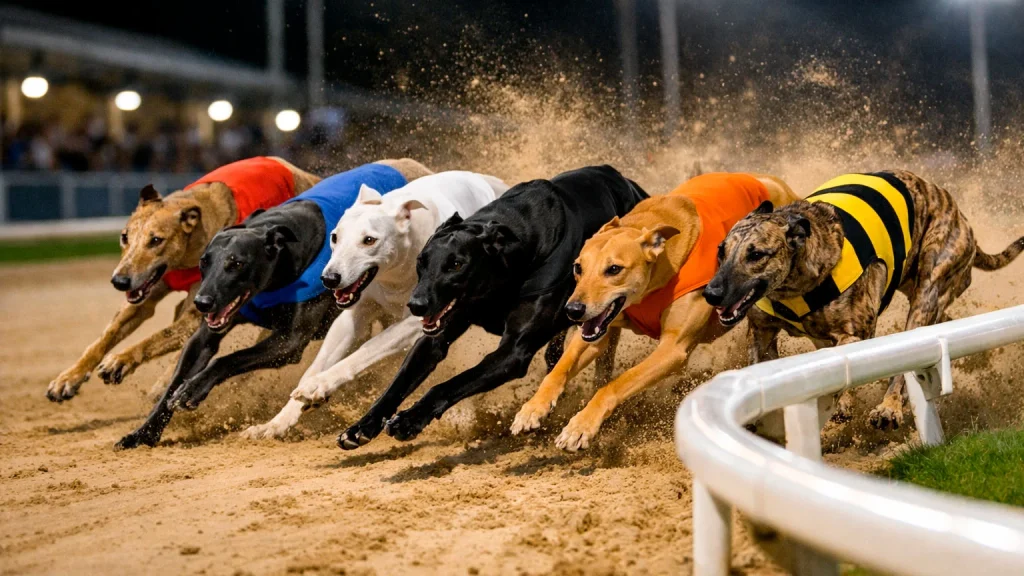
Each-way betting offers a safety net that straight win bets cannot provide. By splitting your stake between win and place components, you create opportunities to profit even when your selection does not finish first. This flexibility makes each-way betting particularly attractive in greyhound racing where six-dog fields create frequent placing opportunities. The wider context is set out in our guide to watching UK greyhound racing.
The concept sounds straightforward, but understanding when each-way betting offers genuine value requires deeper knowledge. Place terms, odds thresholds, and field composition all affect whether splitting your stake improves expected returns or simply increases bookmaker margins.
This guide explains how each-way betting works in greyhound racing, when it makes strategic sense, and how to calculate what you stand to win. With more than 355,000 races run annually across GBGB-licensed tracks, understanding this betting type opens opportunities across the full calendar.
How Each-Way Bets Work
An each-way bet comprises two separate bets of equal stake. The first bet backs your selection to win. The second bet backs your selection to place, meaning finish in a qualifying position according to specified place terms. A £5 each-way bet therefore costs £10 total: £5 on the win and £5 on the place.
If your selection wins, both parts of the bet succeed. You receive winnings from the win bet at full odds plus winnings from the place bet at reduced odds. The combination delivers the best possible outcome from an each-way selection.
If your selection places but does not win, the win bet loses but the place bet wins. You receive the place returns at fractional odds while forfeiting your win stake. This partial success represents the safety net each-way betting provides.
If your selection finishes outside placing positions, both bets lose. You forfeit the entire each-way stake just as you would lose a straight win bet. Each-way betting does not protect against total loss, only against near-misses where your selection runs well without winning.
Standard greyhound races feature six runners. This field size determines the place terms bookmakers offer, directly affecting each-way value across different race types.
Place Terms in Greyhound Racing
Place terms specify how many positions pay out and at what fraction of win odds. Standard greyhound racing terms typically pay places on the first two finishers at one quarter of the win odds. These terms reflect the six-runner field size common to greyhound racing.
One quarter odds means the place portion pays 25% of what a winning bet would return. At 8/1, the place calculation uses 2/1 (one quarter of 8/1). A £5 place bet at 2/1 returns £15 total: £10 profit plus £5 stake return.
Enhanced place terms occasionally appear for special events or promotional offers. Some bookmakers offer three places on certain races or improve fraction to one third. These enhanced terms increase each-way value when available.
Reduced field sizes affect place terms. Races with five runners instead of six may offer only one paying place. Races with fewer runners might not accept each-way bets at all. Checking terms before betting prevents assumptions that prove incorrect.
Comparing place terms across bookmakers identifies the best available offers. Like win odds, place terms vary between operators. Consistently taking the most generous terms compounds into meaningful difference across many bets.
When Each-Way Betting Makes Sense
Longer-priced selections benefit most from each-way betting. When odds exceed 4/1, the place portion provides meaningful returns that cushion against narrow defeats. At shorter prices, place returns barely cover the lost win stake, reducing each-way appeal considerably.
Consistent place performers suit each-way backing. Greyhounds that regularly finish in the first two but struggle to win offer natural each-way profiles. Their form suggests place returns will occur frequently enough to justify the doubled stake. Reviewing recent results identifies runners with strong placing records.
Competitive races with multiple credible contenders favour each-way approaches. When any of several greyhounds might win, each-way betting on your preferred selection provides protection against rivals who run slightly better on the day. Open races create uncertainty that each-way betting helps manage.
Weak favourites create each-way opportunities elsewhere in the field. When the market favourite appears vulnerable, backing a second or third choice each-way captures value if the favourite underperforms but your selection cannot quite capitalise fully. These situations arise regularly in greyhound racing.
Trap positions sometimes influence each-way decisions. A greyhound drawn unfavourably might lack the clear run needed to win but could still place through consistent pace. Each-way betting acknowledges this dynamic where win chances reduce more than place chances.
Uncompetitive races with clear favourites reduce each-way appeal. When one greyhound dominates, place positions become obvious and place odds shorten accordingly. Straight win betting on strong selections or opposing the favourite entirely may offer better value than each-way approaches.
Calculating Each-Way Returns
Winner returns combine full win odds plus quarter place odds. At 8/1 with a £5 each-way bet (£10 total), winning returns £5 times 8 equals £40 profit on the win, plus £5 times 2 equals £10 profit on the place, plus £10 stakes returned. Total return: £60.
Place-only returns apply quarter odds to the place stake. At 8/1 with a £5 each-way bet where your selection places but does not win, you lose the £5 win stake but collect £5 times 2 equals £10 profit plus £5 stake return on the place portion. Total return: £15, for a net profit of £5 on the £10 total stake.
Losing returns equal zero regardless of how close the finish. Missing place positions by a nose produces the same result as trailing the field. The £10 stake forfeits entirely when your selection finishes third or worse in standard six-runner terms.
Online calculators handle each-way arithmetic automatically. Entering odds and stake generates instant return figures for win and place outcomes. Using these tools prevents calculation errors that misrepresent expected value.
Comparing each-way returns with equivalent straight bets reveals when each approach offers better value. Sometimes doubling your win stake produces better expected returns than splitting it each-way. The optimal choice depends on odds, place terms, and your assessment of win versus place probability.
Mastering Each-Way Strategy
Disciplined stake management prevents each-way betting from doubling losses. Because each-way bets cost twice the notional stake, losing streaks deplete bankrolls faster. Adjusting unit sizes to account for doubled outlay maintains sustainable betting patterns.
Tracking results separately for win and place components identifies patterns. You might discover that your selections place regularly but rarely win, suggesting you overestimate their chances. This insight could redirect approach toward different selection criteria or bet types. The exotic version is in forecast and tricast bets.
Enhanced place promotions occasionally offer exceptional value. Bookmaker offers extending places to three positions or improving fractions to one third transform each-way mathematics significantly. Recognising and exploiting these promotions when they align with suitable selections maximises returns.
Each-way betting represents neither universally superior nor inferior strategy compared to straight win betting. Its value depends on specific circumstances: odds, place terms, field composition, and individual greyhound characteristics. Understanding when each-way works and when it does not separates thoughtful bettors from those who apply approaches indiscriminately.
