Greyhound Racing Grading System UK: How Dogs Are Classified
 Available in US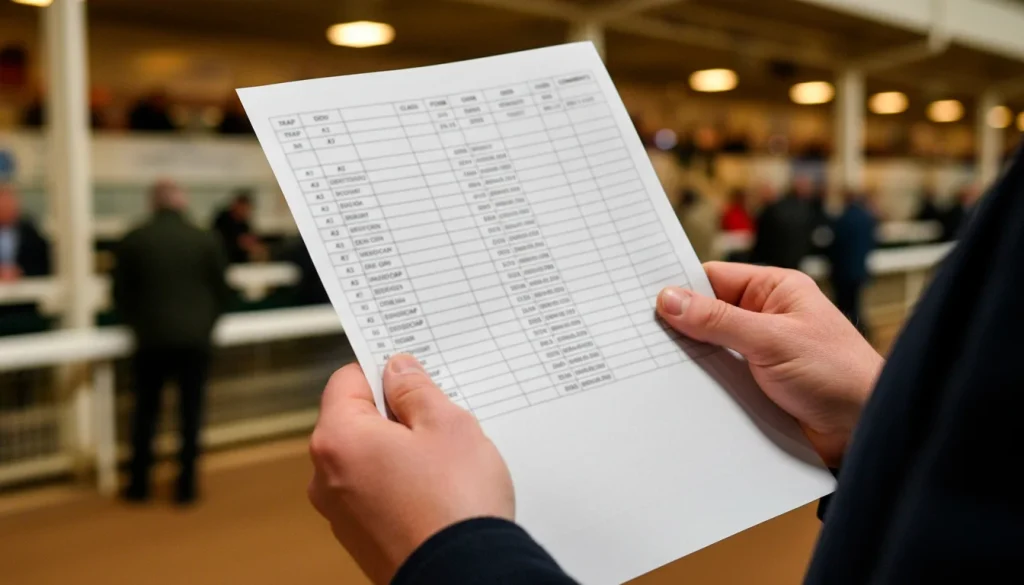
Walk into any British greyhound stadium and the racecard will list each dog’s grade alongside its name. A1, A5, A9 — these alphanumeric codes determine which races a greyhound can enter, shaping the entire competitive structure of the sport. Yet most casual spectators have no idea what the grades actually mean or how dogs move between them. The wider context is set out in our guide to watching UK greyhound racing.
The grading system exists to create competitive racing. Without it, elite greyhounds would dominate every card, slower dogs would never win, and betting markets would become predictable. By separating dogs into performance tiers, tracks ensure that most races feature genuinely competitive fields where any runner might win.
This guide explains how greyhound grading works across the 18 GBGB-licensed tracks in Britain, from the fastest A1 runners to the modest A11 competitors. Understanding these grades improves both the viewing experience and any betting decisions you might make.
How Greyhound Grading Works
Greyhound grading is fundamentally a time-based classification system. Each track maintains its own grading structure calibrated to its specific circuit — a dog’s grade at Romford will not necessarily match its grade at Nottingham because the tracks have different lengths and configurations. The system measures performance against track-specific benchmarks rather than applying universal standards.
When a greyhound first arrives at a track, it undergoes trials to establish its baseline time over standard distances. Racing managers use these trial times, combined with any previous racing history, to assign an initial grade. This starting point is provisional; actual race performance quickly determines whether the dog rises, falls, or remains static in the grading hierarchy.
The fundamental principle is simple: faster dogs compete in higher grades, slower dogs in lower grades. But execution involves considerable nuance. Racing managers must balance competitive integrity (ensuring fair races) against commercial considerations (providing betting interest) and welfare requirements (not running dogs beyond their capabilities).
Each GBGB track employs a racing manager responsible for grading decisions. These officials hold significant discretion within regulatory guidelines, assessing not just raw times but also racing style, trap preferences, and form consistency. A dog that records an exceptional time in favourable conditions might not immediately shoot up several grades if other indicators suggest the performance was anomalous.
The system operates continuously. After every race meeting, grades are reviewed and adjusted based on results. This constant recalibration means that a greyhound’s grade genuinely reflects its current ability rather than historical peaks or troughs.
The Grade Structure: A1 to A11
British greyhound racing uses an alphabetical grading system where A denotes standard flat racing. The number following indicates the tier within that category — A1 represents the elite level, with numbers increasing as ability decreases. Most tracks operate grades from A1 through A9 or A10, though some venues extend to A11 for their slowest competitors.
A1 greyhounds are the fastest runners at their home track. These dogs typically record times within a second of track records over standard distances and compete for the most valuable prizes. At major tracks, A1 races attract the strongest betting interest and feature dogs often trialling for Category One competitions. Only a handful of greyhounds at any venue hold A1 status at any given time.
The middle grades — A4 through A6 — contain the largest populations at most tracks. These workmanlike runners provide the backbone of weekly racing, filling the majority of race slots on regular cards. Their times are respectable without being exceptional, their racing honest if unspectacular. The betting markets treat them as genuine puzzles rather than foregone conclusions.
Lower grades from A7 downward contain dogs that, for various reasons, cannot compete at higher levels. Some are aging former stars no longer capable of their previous times. Others are young dogs still learning the craft, potentially moving up as they mature. A few are simply modest athletes who will spend their entire careers at this level, winning periodically against similar opposition.
Beyond the standard A grades, some tracks use additional classifications. D grades denote dogs in development or those returning from injury, while S grades indicate stayers competing over longer distances. Maiden races cater specifically to dogs yet to win, providing opportunities before full grading integration.
The practical implication for racegoers is straightforward: grade provides a rough guide to competitive level. An A2 race features faster dogs than an A7 race on the same card. Betting odds reflect this hierarchy; favourites in higher grades tend to be shorter-priced because quality differences are clearer.
Moving Between Grades
Greyhounds do not remain static within the grading system. The entire structure depends on constant movement as dogs demonstrate improved or declining form. Racing managers implement grade changes following race meetings, typically announcing adjustments that take effect from the next card.
Promotion generally follows strong performances. A dog winning comfortably, or posting times significantly faster than grade standard, faces elevation to a higher tier. The speed of promotion varies — a spectacular win might trigger an immediate two-grade jump, while consistent minor improvements might result in gradual single-grade steps. Racing managers consider not just the result but the manner of victory, track conditions, and competition quality.
Demotion occurs when performance drops below grade expectations. Dogs finishing consistently at the rear of fields, or posting times markedly slower than their grade demands, face relegation. The welfare dimension matters here too; a dog struggling in its current grade experiences repeated defeats that serve no competitive or welfare purpose. Dropping grades allows it to compete against more appropriate opposition.
Injury returns present particular grading challenges. A dog absent for several months cannot simply resume at its previous grade, as fitness and form are unknown quantities. Most tracks implement a re-grading trial requirement, assessing the returning dog over several runs before assigning a definitive grade. These transitional periods often see dogs placed in handicap or open races rather than strictly graded events.
Track transfers trigger immediate re-grading. A dog’s grade at one venue has no formal standing at another because track configurations differ so substantially. A dominant A2 runner at a tight 400-metre circuit might struggle against A4 opposition at a galloping 480-metre track where its style is less suited. Each track independently assesses incoming dogs through trials and early competitive runs.
Trainers have limited formal input into grading decisions but maintain ongoing dialogue with racing managers. A trainer believing their dog is unfairly graded can request trial opportunities or highlight extenuating circumstances for poor performances. Racing managers generally accommodate reasonable requests, recognising that trainer insight complements statistical analysis.
Open Races and Competitions
Not all greyhound races operate within the grading system. Open races invite entries from any dog meeting specified criteria, regardless of their graded status. These events include the sport’s most prestigious competitions — the English Greyhound Derby, the Scottish Derby, and other Category One fixtures that comprise the pinnacle of British greyhound racing.
Open race qualification typically requires minimum performance thresholds rather than specific grades. A dog entering a Category One event must demonstrate times within a defined margin of track record, ensuring only genuinely competitive runners participate. The resulting fields bring together elite performers from across the country, creating match-ups impossible within normal graded racing.
The prize money differential underscores the distinction. Annual prize funds across UK greyhound racing total £15,737,122, with the bulk concentrated in open competitions. The English Greyhound Derby alone offers £175,000 to the winner. Compare this to graded racing at weekly meetings, where individual race purses might total a few hundred pounds.
Sarah Newman, Marketing and Communications Manager at Arena Racing Company, noted the commercial importance of these flagship events: “Competition for the leisure pound has never been higher, so to grow our footfall in 2025 is a great achievement.” The major opens function as destination events, attracting spectators who might not attend routine graded meetings.
Handicap races offer another alternative to strict grading. Here, dogs of different abilities compete with adjustments — typically staggered starts — designed to equalise winning chances. A fast A2 dog might concede several metres to an A6 competitor, creating theoretical parity at the finish line. These races provide betting interest through their competitive uncertainty while allowing dogs from different grades to meet.
The grading system and open competitions operate as complementary structures. Graded racing develops dogs, providing competitive experience at appropriate levels. Open racing identifies and celebrates the exceptional performers who transcend normal hierarchies.
Understanding Grades for Betting
Grade information provides betting context but requires careful interpretation. A recently promoted dog facing established grade competitors may struggle despite superior raw ability. Conversely, a dog relegated from higher company might dominate its new level for several runs before another promotion. Recent grade movements often indicate more about immediate prospects than the current grade designation itself.
The racecard lists each runner’s grade history, showing recent movements. A pattern of consistent downgrades suggests declining form, while repeated promotions indicates a dog on the improve. Static grades over extended periods suggest a dog operating at its natural level — neither improving nor declining significantly.
Cross-grade analysis within the same race reveals competitive dynamics. When racing managers assemble fields, they aim for competitive balance, but exact matching is impossible. A race might combine a recently demoted A3 dog with an established A4 performer and a freshly promoted A5 runner. Each brings different competitive profiles despite technically similar current grades.
Betting markets incorporate grading information into odds formation, but they do not always capture the nuances. A dog dropping grades following a poor run on unfavoured ground might represent value if returning to preferred conditions. Equally, a heavily backed favourite rising through grades might face its first genuine test against established competition at the new level. The intelligent punter looks beyond headline grades to underlying performance patterns. The rulebook behind it is the GBGB regulations.
Greyhound grading creates the framework for competitive racing across British tracks. It ensures that dogs compete against appropriate opposition, develops talent progressively, and maintains betting interest through genuinely uncertain outcomes. Understanding how grades work and how dogs move between them provides essential context for anyone following the sport seriously.
