UK Greyhound Racing Events: English Derby, Category One Races 2026
 Available in US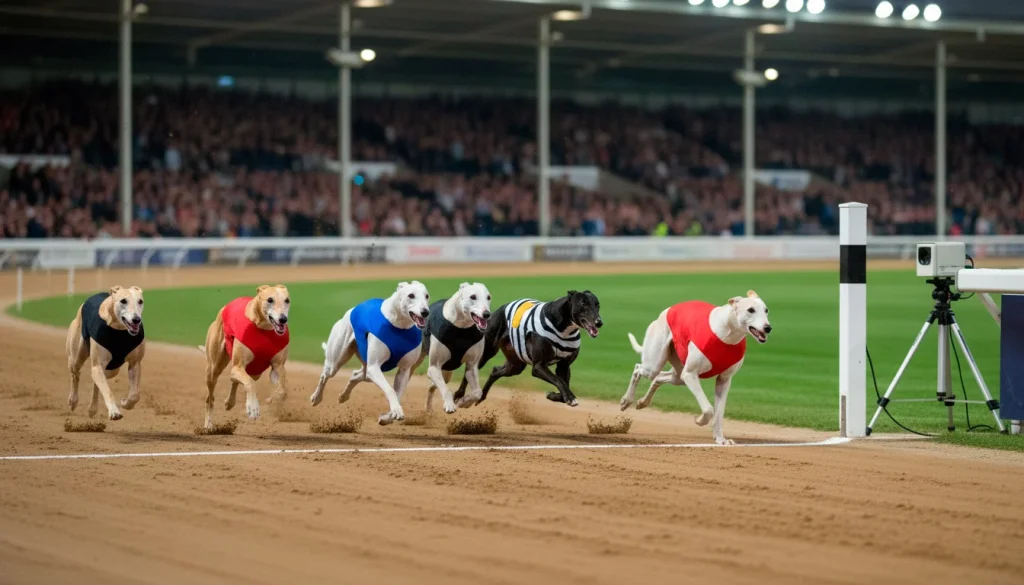
Beyond the regular meetings that fill weekly racing calendars, UK greyhound racing features a hierarchy of prestigious events that showcase the sport’s elite competitors. These major races attract the best greyhounds, the largest crowds, and the most substantial prize money, creating occasions that transcend everyday racing into genuine sporting spectacles. The wider context is set out in our guide to watching UK greyhound racing.
The event structure mirrors other racing sports, with Category One races representing the pinnacle of achievement. These top-tier competitions carry historical significance, substantial rewards, and considerable prestige for connections of winning greyhounds. Trainers, owners, and breeding operations measure success partly by performance in these flagship events, just as horse racing judges by Classic victories and flat championship races.
The English Greyhound Derby stands as the sport’s most famous competition, the equivalent of horse racing’s Epsom Derby in profile and tradition. Finals night at the Derby draws significant crowds, media attention, and betting activity, representing greyhound racing’s showcase to casual observers and dedicated followers alike. The event crystallises everything that makes greyhound racing compelling: speed, competition, drama, and sporting excellence.
Beyond the Derby, numerous other major events punctuate the racing calendar. The Oaks for bitches, the St Leger for stayers, regional championships, and invitation events all contribute to a comprehensive schedule of quality racing. These events reward different athletic attributes and provide multiple pathways to championship achievement.
Understanding the event calendar helps both visitors planning attendance and punters analysing form through high-profile competition. Major events reveal which greyhounds perform under pressure, which trainers prepare dogs effectively for big occasions, and which bloodlines produce genuine class. This guide maps the UK greyhound racing events landscape, from Category One showpieces to regional competitions worth following.
Category One Races Explained
Category One races represent the highest tier in UK greyhound racing’s event classification system. These races carry the greatest prize money, attract the best-quality fields, and confer maximum prestige on winners. The Category One designation indicates a race’s historical importance, competitive standard, and significance within the sport’s calendar.
The classification system descends through Category Two, Three, and Four, with each level representing reduced prize money and field quality. Open races at lower categories still attract quality greyhounds but lack the elite concentration found at Category One level. Understanding these distinctions helps interpret form: winning a Category One race means defeating the strongest available competition.
Premier Greyhound Racing oversees several Category One tracks, coordinating calendars to ensure flagship events receive appropriate spacing and promotion. This organisation works to maintain the prestige of top-tier racing while ensuring viable calendars at participating venues. The interplay between track interests and central coordination shapes how Category One events distribute across the year.
Entry to Category One races typically involves qualification through preliminary rounds. The English Greyhound Derby, for instance, runs heats and semi-finals before the final, creating a tournament structure that builds anticipation and ensures the final features greyhounds who have proven their quality through progressive elimination. This format provides multiple betting opportunities and spectating occasions beyond the final itself.
Category One race distances vary, testing different athletic attributes. Sprint races over shorter distances favour early pace and trap speed. Classic distances around 500 metres suit well-balanced performers. Stayers events over longer distances reward stamina and tactical intelligence. The diversity ensures that different types of greyhounds can find Category One opportunities matching their strengths.
The roll call of Category One races includes historic competitions with decades of heritage alongside newer additions that have earned elevated status through competitive quality. The English Greyhound Derby, Oaks, St Leger, Cesarewitch, and other established events form the traditional calendar backbone. Understanding which races carry Category One status helps identify the occasions where form carries greatest weight and competition reaches highest intensity.
Winning a Category One race transforms a greyhound’s profile. The achievement affects breeding value for retired dogs, attracts attention from prospective owners, and establishes the dog’s place in racing history. For trainers, Category One success demonstrates ability to prepare dogs for maximum competitive demands, enhancing reputation and potentially attracting higher-quality dogs to their kennels.
The English Greyhound Derby
The English Greyhound Derby stands as the sport’s most prestigious race, the event by which greyhound racing measures its highest achievements. First run in 1927, the Derby has crowned champions across nearly a century of competition, establishing traditions and records that define the sport’s history.
The race currently carries prize money of £175,000, making it the richest event in British greyhound racing. This financial incentive attracts the best available greyhounds, ensuring fields of exceptional quality. Winners claim not just substantial purses but permanent places in the sport’s record books.
Derby format involves multiple rounds of elimination. Heats establish which greyhounds advance to semi-finals, and semi-final winners progress to the six-runner final. This tournament structure means that Derby winners must perform consistently across several races over multiple weeks, demonstrating sustained excellence rather than single-race fortune.
The qualifying process serves multiple purposes beyond simple elimination. It builds public interest through progressive rounds, creates multiple betting opportunities, and allows trainers to assess dogs’ competitive readiness. Greyhounds peaking too early or too late miss optimal form for the final itself, making preparation timing crucial to success.
The competition has moved between venues over its history. White City in London hosted the Derby for decades before that stadium’s closure. Wimbledon subsequently became the event’s home until its own closure in 2017. Currently, Towcester serves as the Derby venue, continuing the event’s prestige at a modern facility designed to showcase top-level racing.
Finals night represents greyhound racing’s most anticipated annual occasion. Attendance peaks, television coverage reaches its broadest audience, and betting activity concentrates around the flagship race. For many casual followers, the Derby final provides their primary annual engagement with greyhound racing, making it the sport’s most important shop window.
Historical Derby winners include legendary greyhounds whose names resonate decades after their careers ended. Mick the Miller won in 1929 and 1930, becoming the sport’s first genuine celebrity. More recent winners continue adding to the Derby’s honour roll, their achievements measured against those of historic predecessors. Owning, training, or breeding a Derby winner represents the pinnacle of greyhound racing achievement.
The Derby’s influence extends beyond the race itself. Greyhounds with Derby credentials command premium prices, whether for continued racing, breeding, or retirement homes. The event sets the standard against which other competitions measure themselves, and its organisation influences how the sport presents its most important occasions.
Betting markets for the Derby attract attention from beyond regular greyhound punters. The event’s profile brings casual bettors who might not engage with everyday racing, while established followers analyse form intensively across qualifying rounds. The combination creates substantial liquidity and market depth unusual in greyhound racing contexts.
Annual Racing Calendar 2026
The UK greyhound racing calendar distributes major events throughout the year, creating consistent high-profile racing across all seasons. This scheduling ensures that neither any single period becomes overcrowded nor any extended gap leaves the sport without showcase occasions.
Early year racing builds toward spring’s prestigious events. January and February feature preparatory open races that reveal which greyhounds emerge from winter in competitive condition. Trainers use these meetings to assess form and plan campaigns for the year’s major competitions. Smart observers study early-season results for clues about future contenders.
Spring brings several Category One events as the racing season intensifies. The Oaks, exclusively for bitches, provides the female equivalent of the Derby’s prestige. This event reveals the best of the year’s female racing population, with winners often proving their quality by competing successfully against male opposition in subsequent mixed events. Spring championships at various tracks establish regional hierarchies before summer’s national competitions.
Summer centres on the English Greyhound Derby, typically reaching its final in late June or early July. The weeks preceding the final fill with heats and semi-finals, creating sustained interest and multiple betting opportunities. Derby month dominates greyhound racing’s public profile, with media coverage and casual interest peaking around this flagship competition.
The Derby qualifying rounds create their own drama as contenders emerge, disappoint, or confirm potential. Following these preliminary stages provides insight into which dogs enter the final with momentum and which merely survive to participate. Form lines established through heats often prove predictive for final day betting.
Autumn features another cluster of major events. The St Leger provides a staying test over longer distances, identifying greyhounds with stamina that pure sprinters lack. The Cesarewitch offers another high-profile autumn opportunity, while regional championships and invitation events supplement the Category One calendar.
Winter racing continues at full pace despite shorter days and challenging weather. Christmas and New Year meetings traditionally attract strong crowds, with holiday periods providing leisure time for trackside attendance. Boxing Day fixtures at major venues represent some of the year’s best-attended meetings, combining festive atmosphere with quality racing.
The calendar remains subject to adjustment as track closures, openings, and scheduling negotiations reshape the landscape. New venues like Dunstall Park create opportunities to host established events in fresh settings, while track closures occasionally force relocations. Following official announcements ensures accurate awareness of where major 2026 events will take place.
Planning attendance around the calendar involves balancing personal availability against event significance. Category One finals justify travel that regular meetings might not warrant. Concentrated periods around Derby time or autumn championships offer opportunities to attend multiple quality meetings in compact timeframes.
Regional Events and Open Races
Below Category One level, regional events and open races provide substantial competitive opportunities. These events attract quality greyhounds who may not quite reach elite level or who are building toward bigger targets. For punters and spectators, this tier offers frequent quality racing without the concentrated crowds of flagship events.
Regional championships serve local racing communities while attracting entries from beyond immediate geographic areas. Track championships at major venues identify the best performers at specific circuits, rewarding greyhounds whose running styles particularly suit local track configurations. These events carry meaningful prize money and genuine prestige within their regional contexts.
Open races without championship status still attract competitive fields. Entry requirements ensure minimum quality standards, while prize money incentivises connections to target these events for capable greyhounds. The open race calendar provides consistent opportunities throughout the year, filling gaps between major championship events.
Puppy derbies and juvenile events identify emerging talent, creating excitement around the sport’s future stars. Young greyhounds competing in these age-restricted events may progress to senior Category One competition if their early promise translates into mature ability. Following juvenile racing offers insight into which dogs might contest future Derby finals.
Marathon and stayers events test endurance over distances beyond standard racing. These specialised competitions attract greyhounds bred and trained for sustained effort rather than pure speed. The different athletic demands create separate hierarchies of excellence, with staying champions distinguished from sprint specialists.
Invitation events bring together greyhounds selected for specific qualities rather than earned through open qualification. All-star formats match top performers in exhibition-style competitions designed to showcase the sport’s best. These events sometimes feature match races between individual rivals, creating narrative interest beyond standard competitive formats.
Following regional events builds deeper understanding of greyhound racing than focusing exclusively on headline competitions. Form established in lower-tier events often predicts performance when greyhounds step up to bigger challenges. The comprehensive racing calendar means that quality action occurs almost daily at venues across Britain.
Prize Money in UK Greyhound Racing
Prize money structures shape competitive incentives throughout UK greyhound racing. The distribution between headline events and regular racing influences which competitions trainers target and how greyhounds’ careers develop. Understanding prize money helps interpret competitive choices that might otherwise seem puzzling.
Total UK greyhound racing prize money reaches £15,737,122 according to industry figures, distributed across thousands of races at licensed venues. This substantial pool supports the professional infrastructure of training, ownership, and breeding that sustains the sport. Prize money provides direct income for winning connections while influencing the broader economics of greyhound racing participation.
Category One events claim the largest individual prizes, with the English Greyhound Derby’s £175,000 representing the pinnacle. Other major races offer prize funds in the tens of thousands, making victories genuinely financially meaningful rather than purely symbolic achievements. These concentrated rewards attract the best greyhounds to flagship events.
Regular racing carries more modest prizes, though consistent performance across multiple victories can generate substantial cumulative earnings. Trainers balance the appeal of major prizes against the practical reality of competitive difficulty, sometimes targeting lower-level events where their dogs have realistic winning chances rather than pursuing glory in races they are unlikely to win.
Prize money has declined in real terms as betting revenues contract. The industry’s funding pressures manifest in reduced prizes at some levels, affecting incentives for participation and potentially concentrating quality dogs into fewer hands that can afford reduced financial returns. This economic pressure forms part of broader challenges facing UK greyhound racing.
Owner returns depend heavily on prize money, given that greyhound racing offers limited alternative income streams. Unlike horse racing, greyhound breeding does not generate comparable stud fees for successful males. Prize winnings therefore represent the primary financial reward for ownership, making competitive success more directly consequential for economic outcomes.
Sponsorship supplements prize funds at some events, with bookmakers and other businesses contributing to purses in exchange for promotional association. These partnerships help maintain prize levels that racing revenues alone might not sustain, though sponsor interest depends on the sport’s broader profile and audience reach.
Attending Major Events
Attending major greyhound racing events provides experiences that streaming and betting cannot replicate. The atmosphere of packed grandstands, the visceral excitement of watching elite dogs race, and the social energy of shared enthusiasm create memorable occasions for dedicated followers and newcomers alike.
Recent attendance data shows growing interest in premium events. Arena Racing Company reported attendance at the Premier Greyhound Racing Oaks Final increased 324% compared to the previous year’s event. While venue changes affect direct comparisons, such dramatic growth indicates that well-promoted major events can draw substantial crowds.
Nottingham Stadium recorded more than 1,000 spectators for its Boxing Day fixture, described as the largest crowd in recent years. Holiday timing, family-friendly scheduling, and competitive racing combined to create exceptional attendance. Such occasions demonstrate that greyhound racing events can compete for leisure attention when circumstances align favourably.
“Competition for the leisure pound has never been higher, so to grow our footfall in 2025 is a great achievement,” noted Sarah Newman, Marketing and Communications Manager at Arena Racing Company. This perspective acknowledges the competitive entertainment landscape while celebrating evidence that quality events attract audiences.
Planning attendance at major events requires advance preparation. Popular finals sell out or reach capacity, making early booking essential for guaranteed access. Hospitality packages at premier events command premium prices but offer enhanced experiences: quality dining, better viewing positions, and additional amenities that justify the cost for special occasions.
Travel and accommodation arrangements become relevant for events at distant venues. Derby finals at Towcester, for instance, may require overnight stays for attendees from northern regions. Building these logistics into event planning ensures that practical challenges do not diminish enjoyment of the occasion itself.
First-time attendees at major events sometimes feel overwhelmed by unfamiliar environments and racing rhythms. Arriving early allows acclimatisation before significant races begin. Studying race cards beforehand provides context that enhances engagement. Bringing experienced companions offers guidance through the evening’s rituals and betting opportunities.
Major events suit different visiting styles. Some attendees treat them as serious betting occasions, studying form meticulously and wagering strategically across the card. Others approach them as entertainment experiences, placing casual bets while enjoying atmosphere, food, and company. Both approaches find satisfaction at well-organised major meetings.
Conclusion
UK greyhound racing’s event structure provides a clear hierarchy from everyday meetings through regional championships to Category One showpieces. Understanding this landscape helps followers identify the occasions that matter most, plan attendance at significant events, and interpret form through the context of competitive levels.
The English Greyhound Derby remains the sport’s flagship, the event where champions prove themselves against the strongest competition for the richest prizes. Other Category One races provide additional pinnacles across different distances and demographic categories, ensuring that various types of greyhounds find appropriate championship opportunities.
Prize money distribution reflects the sport’s priorities and economics. The concentration of rewards at major events creates genuine stakes for top-level competition while recognising that regular racing also requires meaningful incentives. Following prize money patterns reveals how the industry allocates resources and values different competitive achievements.
Attendance at major events offers experiences beyond routine following. The atmosphere, excitement, and social dimension of big race nights create memories that watching from home cannot replicate. For those able to attend flagship occasions, the investment in travel and tickets produces returns in enjoyment and engagement with greyhound racing at its most compelling.
The 2026 calendar will bring established events to familiar and potentially new venues as the sport continues adapting to track network changes. Following official announcements ensures awareness of where significant races will occur and when. Whether experienced follower or curious newcomer, UK greyhound racing’s major events provide genuine sporting drama worthy of attention. Where they are staged is in the stadium guide.
For newcomers considering their first major event attendance, starting with a prestigious occasion makes sense despite the larger crowds and higher costs. These events showcase greyhound racing at its best, creating first impressions that accurately represent the sport’s potential for excitement and entertainment. The quality of competition, atmosphere, and presentation justifies choosing a flagship event over everyday racing for initial trackside experience.
