UK Greyhound Tracks 2026: All 18 GBGB Stadiums Guide
Best Greyhound Betting Sites – Bet on Greyhounds in 2026
Loading...
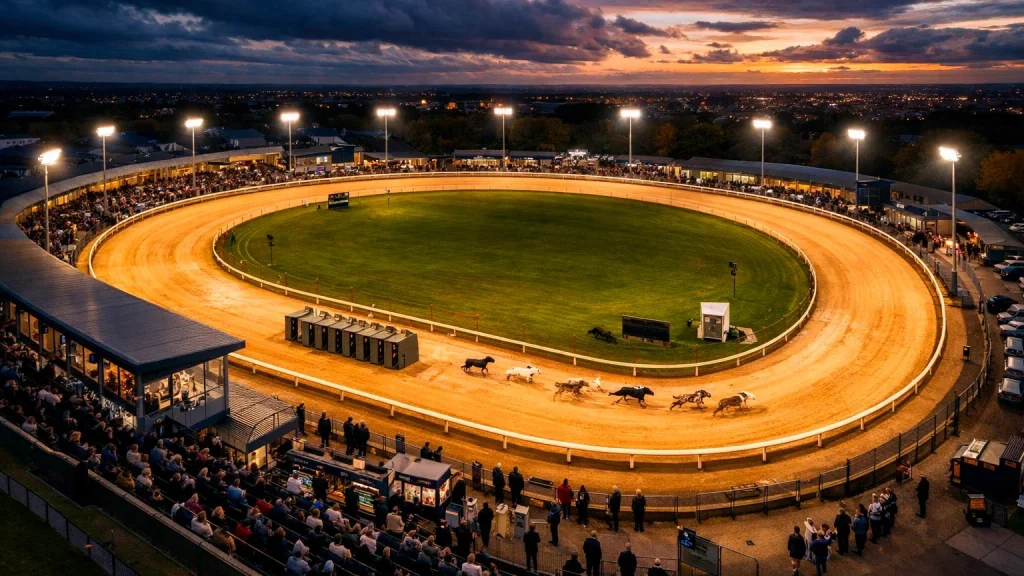
The geography of UK greyhound racing has contracted dramatically over the decades, but what remains represents a concentrated network of purpose-built stadiums offering regular racing calendars and professional facilities. Understanding where these tracks sit and what each offers helps both punters studying form across different venues and visitors planning an evening at the dogs.
Britain currently operates 18 GBGB-licensed greyhound tracks as of January 2025, with 17 in England and one in Wales. Scotland has no licensed tracks, though legislative debates about greyhound racing welfare continue there. This network represents the regulated heart of British greyhound racing, with each venue operating under Greyhound Board of Great Britain oversight ensuring consistent standards and integrity controls.
The distribution of these tracks follows population density and historical patterns established during the sport’s mid-twentieth century peak. Greater London and the surrounding regions host multiple venues within easy reach of millions of potential visitors. Northern England maintains several tracks serving industrial cities with deep greyhound racing traditions. The Midlands and South West each contribute venues to the national calendar, ensuring geographic coverage despite the reduced overall footprint.
Track characteristics influence racing significantly. Different circumferences, bend configurations, and surface conditions create varied racing environments. Dogs that excel at one venue may struggle at another, making track-specific form analysis essential for serious punters. Venues also differ in atmosphere, facilities, and accessibility, factors that matter for visitors beyond pure racing considerations.
This guide maps every licensed UK greyhound stadium, examines what distinguishes each venue, and addresses practical considerations for those planning visits. Whether you seek the nearest track for a spontaneous evening out or want to understand how venue characteristics influence racing conditions, the information here provides a comprehensive foundation.
UK Greyhound Tracks Overview
The 18 GBGB-licensed tracks operate under a regulatory framework ensuring consistent welfare standards, racing integrity, and operational practices. GBGB licensing requires venues to meet specific criteria around track dimensions, safety features, veterinary provision, and kennel facilities. These standards create a baseline quality that distinguishes licensed racing from historical unregulated alternatives.
Track configurations vary considerably within these standards. Circumferences range from around 380 metres at smaller venues to over 500 metres at larger stadiums. These differences significantly impact race dynamics: shorter tracks favour quick trappers and early pace, while longer circuits allow staying power and tactical racing to influence outcomes. Understanding these characteristics matters for anyone analysing form across different venues.
Running surfaces also vary. Sand-based tracks predominate, though maintenance practices and specific compositions differ between venues. Surface conditions change with weather, with rain affecting grip and running speeds. Experienced punters factor these variables into their assessments, recognising that times from one track translate imperfectly to another.
Most tracks operate multiple racing sessions weekly, typically combining afternoon BAGS meetings (Bookmakers’ Afternoon Greyhound Service) that serve betting shop customers with evening sessions attracting on-course spectators. The balance varies by venue: some prioritise high-frequency BAGS coverage for betting revenue, while others focus on creating event atmospheres for trackside audiences.
The ownership landscape has consolidated significantly. Arena Racing Company operates several major tracks including Romford, Newcastle, and Nottingham. Independent ownership persists at some venues, creating variation in investment levels, promotional activity, and strategic direction. This mix produces different characters across the circuit, from slick corporate operations to more traditional owner-operated stadiums.
Facilities range from basic to genuinely impressive. Premier tracks offer modern grandstands, quality restaurants, hospitality suites, and extensive betting areas. Smaller venues provide more intimate experiences with basic catering and seating. Neither approach is inherently better; the appropriate choice depends on what you seek from a track visit. Some prefer the bustle and amenities of large operations, others enjoy the authentic atmosphere of traditional greyhound stadiums.
Prize money distribution concentrates at premier venues hosting Category One races, though all licensed tracks contribute to total industry prize pools. The overall UK greyhound racing prize fund reaches significant levels, supporting the professional infrastructure of trainers, kennels, and racing operations across the country.
England Greyhound Stadiums
The seventeen English tracks span the country from Sunderland in the northeast to Poole in the southwest, with particular concentration around London and the Midlands. Each venue carries distinct characteristics shaped by its history, location, and management approach.
Romford Greyhound Stadium in East London serves as one of the sport’s flagship venues. The track hosts Category One races and major finals, drawing substantial crowds for prestigious meetings. Its 400-metre circumference and modern facilities make it a benchmark for the industry. Racing typically occurs Tuesday, Thursday, and Saturday evenings alongside regular BAGS meetings. The venue sits within easy reach of central London, making it accessible for casual visitors as well as dedicated followers.
Newcastle is another Arena Racing Company venue with particular character. The Brough Park track in the northeast has hosted greyhound racing since 1928, establishing deep local traditions. The 435-metre circuit suits a variety of running styles. Facilities underwent significant renovation in recent years, balancing heritage with modern expectations. Newcastle serves as the regional hub for northeast greyhound racing, with loyal local support supplementing visitors from across northern England.
Nottingham Greyhound Stadium at Colwick Park operates within a broader racing and events complex. The track frequently hosts significant meetings, and its facilities accommodate large crowds when major competitions arrive. The venue’s relationship with horse racing through the adjacent racecourse creates a distinctive multi-sport atmosphere unusual in UK greyhound racing.
Towcester in Northamptonshire occupies a unique position, having originally developed as a horse racing venue before adding greyhound facilities. The track’s 414-metre circumference and modern infrastructure reflect this motorsport-influenced development. Its location provides good access from both the Midlands and southern regions.
Perry Barr in Birmingham maintains strong historical significance. The 430-metre track has operated since 1928, witnessing generations of greyhound racing in Britain’s second city. Recent years brought uncertainty about its future, but continued operation reflects both local support and the venue’s importance to the Midlands greyhound racing calendar.
Sheffield Owlerton Stadium combines greyhound racing with speedway, sharing facilities between the two sports. This dual-purpose operation creates scheduling constraints but also introduces audiences from one sport to the other. The 415-metre track sits within a compact venue that prioritises authentic atmosphere over premium facilities.
Sunderland Greyhound Stadium represents the northernmost point of the GBGB network. The venue serves a region with substantial industrial heritage and working-class sport traditions. Despite operating in a challenging economic environment, the track maintains regular racing and loyal local support.
Monmore Green in Wolverhampton has hosted greyhound racing since 1928, making it one of the oldest continuously operating tracks. The venue recently gained a neighbour with the opening of Dunstall Park, the first new greyhound track in over a decade. Monmore’s 415-metre circuit maintains traditional character while benefiting from incremental facility improvements.
Harlow Greyhound Stadium provides coverage for the Essex and Hertfordshire corridor north of London. The venue operates a consistent calendar of meetings, serving both local enthusiasts and visitors from the capital seeking alternatives to major London tracks.
Kinsley in West Yorkshire offers another northern venue, though with more modest facilities than some larger operations. The track serves greyhound racing’s working-class heartlands, maintaining traditions that stretch back generations in the region’s sporting culture.
Yarmouth Greyhound Stadium brings racing to the East Anglian coast. The venue benefits from tourist traffic during summer months while serving a dispersed regional population year-round. Track characteristics favour certain running styles, creating form advantages for dogs with appropriate experience.
Poole Greyhound Stadium represents the southwestern extent of English greyhound racing. The Dorset venue serves a region otherwise distant from the sport’s traditional strongholds, providing local access for enthusiasts who might otherwise face lengthy journeys to alternative tracks.
Doncaster Greyhound Stadium continues the town’s sporting traditions, sharing its location with the famous racecourse. The venue operates a solid calendar and benefits from the infrastructure surrounding Doncaster’s broader racing facilities.
Crayford Greyhound Stadium, situated in southeast London, has faced persistent uncertainty about its long-term future. Despite this, the venue continues operating and serves an important role in the London and Kent greyhound racing scene. The 380-metre track favours certain running styles, creating distinctive form patterns.
Central Park Stadium in Sittingbourne provides Kent with its second licensed track. The venue operates more modestly than some larger operations but maintains consistent racing and local support.
Hall Green Greyhound Stadium in Birmingham complements Perry Barr in serving the West Midlands. The venue’s 430-metre track has hosted greyhound racing for decades, establishing deep roots in the city’s sporting culture.
Wales: Valley Greyhound Stadium
Valley Greyhound Stadium in Ystrad Mynach stands as Wales’s sole licensed greyhound track. This singular status makes it both a focal point for Welsh greyhound racing and a politically significant venue amid ongoing legislative debates about the sport’s future in the country.
The track operates under the same GBGB regulations as English venues, maintaining consistent welfare and integrity standards. Its 400-metre circumference provides a standard racing configuration, and facilities meet the requirements expected of licensed operations. The venue serves greyhound racing enthusiasts across south Wales, though its catchment area necessarily extends into neighbouring English regions given the absence of alternative Welsh tracks.
Valley’s isolation within Wales creates both challenges and opportunities. Without local competitors, the venue captures all Welsh-based racing demand. However, it also bears full responsibility for representing greyhound racing to Welsh audiences and policymakers, a burden that weighs heavily given current political pressures.
The Welsh Government has considered legislation to ban greyhound racing, with the Prohibition of Greyhound Racing (Wales) Bill introduced in September 2025. If passed, Valley would close, eliminating licensed greyhound racing from Wales entirely. The debate has crystallised around welfare concerns versus economic and cultural arguments for retention. Whatever the outcome, Valley’s significance extends beyond its modest facilities to encompass the sport’s very existence in the principality.
For visitors, Valley offers authentic Welsh greyhound racing with local character. The venue lacks the scale and facilities of major English tracks but provides genuine atmosphere and straightforward access to racing. Those seeking to experience Welsh greyhound racing should consider visiting while the opportunity remains available, regardless of one’s position on the broader political questions.
Recent Closures and New Openings
The UK greyhound track network has experienced sustained contraction since the sport’s peak decades. Context matters here: in the 1940s, Britain operated 77 licensed tracks alongside more than 200 independent venues. The current 18 represents a dramatic reduction, though the pace of closures has slowed compared to earlier decades.
Recent years brought notable losses. Wimbledon closed in 2017, ending one of greyhound racing’s most famous venues after over 80 years of operation. The site’s valuable London real estate proved more attractive for redevelopment than continued racing use. Similar pressures affected other venues where land values exceeded racing revenues.
Henlow in Bedfordshire and Swindon in Wiltshire both ceased operations in recent years, reducing coverage in their respective regions. These closures typically resulted from combinations of declining attendance, reduced betting revenue, rising costs, and the perpetual temptation of property development. Each closure removed not just a racing venue but local employment, community gathering spaces, and connections to sporting traditions.
Against this backdrop of contraction, Dunstall Park Greyhound Stadium opened on 19 September 2025, becoming the first new UK greyhound track in more than a decade. Located in Wolverhampton, Dunstall Park replaced Perry Barr Stadium and represents Arena Racing Company investment in the sport’s future. The venue features modern facilities designed to contemporary standards rather than retrofitted from older infrastructure.
Dunstall Park’s opening signals that parts of the industry see viable futures worth investing in. The track’s development occurred despite broader challenges facing greyhound racing, suggesting confidence in demand sufficient to support new capacity. Whether this proves an isolated exception or the beginning of renewed investment depends on factors including attendance patterns, betting revenues, and the regulatory environment.
The final independent “flapper” track in England closed in March 2025, ending unlicensed greyhound racing that once flourished outside the regulated system. These independent operations faced no GBGB oversight, operating under different standards that critics found concerning. Their disappearance concentrates all British greyhound racing within the licensed system, potentially improving overall welfare standards while reducing total racing availability.
Looking forward, the track network seems likely to remain under pressure. Rising operational costs, competition for leisure spending, and ongoing welfare debates create challenging conditions. However, the venues that survive have demonstrated resilience, adapted to changing circumstances, and maintained sufficient support to continue operations. The current 18 tracks may represent a stable core rather than a temporary position on an inevitable decline.
How to Choose a Track to Visit
Selecting a greyhound track involves balancing practical considerations against your preferences for atmosphere, facilities, and experience type. No single venue suits everyone equally, and understanding what distinguishes different options helps match your expectations to reality.
Location usually dominates initial decisions. The greyhound track nearest your home or hotel provides the most convenient option for spontaneous visits. However, accepting slightly longer journeys opens alternatives that might better suit your priorities. Someone willing to travel an extra hour gains access to venues with different character, facilities, or racing calendars.
Racing calendars vary significantly between tracks. Major venues host multiple meetings weekly, providing frequent opportunities regardless of your availability. Smaller tracks may race only once or twice weekly, requiring schedule coordination. Before travelling, verify that racing actually occurs on your intended date rather than assuming regular operation.
Facilities matter differently depending on your visiting style. If you seek quality dining, comfortable seating, and comprehensive betting facilities, larger venues deliver these amenities more reliably. If you prefer unpretentious atmospheres where the racing itself takes centre stage, smaller traditional tracks often provide more authentic experiences. Neither approach represents objectively better greyhound racing, just different interpretations of what a track visit should involve.
Racing quality also varies. Category One tracks host the most prestigious competitions and attract the highest-quality greyhounds. Following elite racing concentrates at venues like Romford, Nottingham, and Newcastle during major meetings. Everyday racing at smaller tracks features less prominent dogs but often produces competitive action with strong form guides to study.
Consider whether you want trackside atmosphere or betting-focused convenience. Some venues excel at creating event atmospheres with large crowds, entertainment, and social energy. Others operate more quietly, serving regular punters who want efficient access to racing without elaborate frills. Your preference between these modes should influence venue selection.
For first-time visitors, starting at a major track provides the fullest introduction to greyhound racing. The facilities, racing quality, and operational polish showcase the sport at its best. Once familiar with the basics, exploring smaller venues reveals different dimensions of greyhound racing culture that larger operations cannot replicate.
Attendance Trends and Visitor Experience
After years of declining attendance, recent data suggests stabilisation and selective recovery at some venues. Arena Racing Company reported that attendance across their greyhound stadiums increased 5% in 2025, indicating that investment in facilities and experience has begun producing results.
Major events demonstrate particularly strong drawing power. The Premier Greyhound Racing Oaks Final at Dunstall Park saw attendance increase 324% compared to the previous year’s event at Perry Barr, according to Arena Racing Company reporting. While this dramatic figure reflects both genuine growth and the appeal of a new venue, it indicates that quality events can attract substantial crowds when properly promoted.
Nottingham Stadium recorded more than 1,000 spectators for its Boxing Day fixture, described as the largest crowd in recent years. These holiday and special event attendances show that greyhound racing retains capacity to draw audiences when circumstances align. The challenge lies in translating occasional peaks into sustained regular attendance.
“Competition for the leisure pound has never been higher, so to grow our footfall in 2025 is a great achievement,” said Sarah Newman, Marketing and Communications Manager at Arena Racing Company. This perspective acknowledges that greyhound racing competes against proliferating entertainment options for limited consumer attention and spending.
The visitor experience has evolved in response to changing expectations. Tracks increasingly emphasise social and dining elements alongside racing itself. Modern hospitality offerings compete more credibly with alternative evening activities, positioning greyhound racing as entertainment rather than pure betting opportunity. This shift targets demographics beyond traditional racing audiences.
Family-friendly initiatives have expanded at several venues, with designated areas, appropriate pricing structures, and programming designed to introduce new generations to greyhound racing. Whether these efforts successfully recruit future regular attendees remains to be seen, but they represent conscious attempts to broaden appeal beyond historical demographics.
Corporate and group bookings contribute significantly to attendance at major tracks. Hospitality packages offer businesses convenient entertainment options with racing providing natural conversation and activity structure. These bookings bring audiences who might never attend independently, potentially converting some into future enthusiasts.
The pandemic period disrupted attendance patterns, and recovery has proven uneven. Some venues returned to pre-pandemic levels relatively quickly; others continue working toward previous baselines. The streaming and betting technology adopted during restrictions remains, supplementing rather than replacing trackside attendance for many followers.
Conclusion
Britain’s 18 GBGB-licensed greyhound tracks represent a contracted but consolidated network serving dedicated enthusiasts and casual visitors alike. The distribution across England and Wales ensures geographic accessibility for most of the population, even if the density of options has diminished compared to historical peaks.
Each venue carries distinct character shaped by location, history, facilities, and management approach. Major tracks offer polished experiences with comprehensive amenities; smaller venues provide authentic atmospheres that connect to greyhound racing’s working-class traditions. Neither represents the definitive greyhound track experience, and exploring different options reveals the sport’s varied dimensions.
Recent attendance improvements suggest that well-operated tracks can compete for leisure spending despite challenging circumstances. The opening of Dunstall Park demonstrates continued investment appetite within parts of the industry. Simultaneously, ongoing legislative debates in Wales and Scotland remind observers that the track network’s future remains contested terrain.
For those interested in visiting UK greyhound tracks, opportunities exist across the country. Whether seeking convenient local access or willing to travel for specific experiences, the current network provides options to suit different preferences and priorities. The sport continues adapting to contemporary circumstances while maintaining connections to traditions stretching back nearly a century. That combination of evolution and continuity defines the UK greyhound track experience in 2026.