Greyhound Racing Distances UK: Standard Race Lengths Explained
 Available in US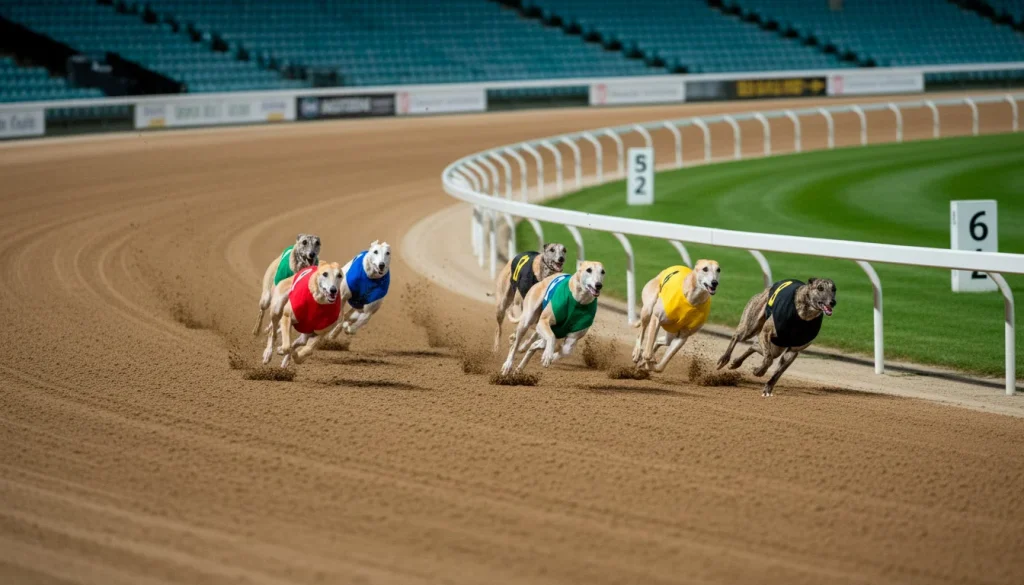
Greyhound racing is not a one-distance sport. While the casual observer might assume all races follow the same format, British tracks host competitions ranging from explosive 230-metre dashes to gruelling 1,000-metre marathons. The distance fundamentally shapes which dogs compete, how races unfold, and what betting strategies apply. The wider context is set out in our guide to watching UK greyhound racing.
Distance variation exists because greyhounds, like human athletes, possess different physical profiles. Some are pure sprinters — blistering speed but limited stamina. Others are stayers who build pace gradually and maintain it over longer trips. The sport accommodates both types, and everything in between, through its distance programme.
Understanding greyhound distances matters for anyone serious about following the sport. A dog’s distance preference determines its racing opportunities, affects its likely running style, and influences form interpretation. This guide covers the standard distances run across the 18 GBGB-licensed tracks, explaining how distance categories work and what they mean for competitive racing.
Standard UK Racing Distances
British greyhound tracks operate on circuits of varying sizes, which directly determines the distances available at each venue. A track’s circumference dictates how far dogs run to complete one lap, with races configured as fractions, full laps, or multiple laps depending on the intended distance.
The most common race distance across UK tracks falls between 450 and 500 metres. This range represents the standard middle distance — far enough to require genuine stamina, short enough that early pace remains relevant. Most graded races on regular cards use distances within this band, making it the bread-and-butter of British greyhound racing.
Track configurations vary considerably across the 18 GBGB-licensed venues. Smaller circuits like Romford measure approximately 380 metres per lap, while larger tracks like Towcester approach 500 metres. This variation means that a 480-metre race might require one-and-a-quarter laps at some venues but barely exceed a single circuit at others.
Sprint distances typically range from 210 to 300 metres. These races complete before the field reaches a full lap, testing raw speed over acceleration and early pace. The starting position advantage is pronounced — dogs breaking poorly from the traps have minimal distance to recover.
Staying distances extend from 640 metres upward, with some tracks offering marathon events exceeding 900 metres. These races demand sustained effort over multiple bends, favouring dogs with superior stamina and tactical racing ability rather than pure explosive speed.
The distance programme at any venue reflects its physical constraints and commercial considerations. Tracks balance variety (offering multiple distance options) against scheduling practicality (running sufficient races per meeting). Most venues settle on three to five standard distances, covering sprint, middle, and staying categories.
Sprint, Middle and Staying Races
Sprint races reward the dogs that explode from the traps and maintain top speed through minimal bends. The ideal sprinter combines exceptional acceleration with raw velocity — the greyhound equivalent of a 100-metre runner. These dogs tend to be lighter-framed, with powerful hindquarters providing the thrust for rapid starts.
The tactical dimension in sprints is limited. There is simply insufficient distance for mid-race positioning changes to matter much. Dogs either lead from the first bend or spend the entire race chasing. Trap draw assumes disproportionate importance; inside traps offer the shortest route to the first turn, providing measurable advantage when fractions of a second separate victory from defeat.
Middle-distance races — the 450 to 550-metre range — constitute the majority of British greyhound racing. This distance demands both pace and stamina, creating the most varied and competitive fields. Dogs can win from the front, track leaders before striking late, or produce sustained runs from unpromising positions. The English Greyhound Derby, the sport’s premier event, is contested over 500 metres at this category.
Staying races require altogether different athletic profiles. Pure sprinters fade badly over 700 metres or more, their explosive speed exhausted before the winning post arrives. Stayers build pace progressively, conserve energy through the early stages, and produce their best running in the final quarter of the race. Physical build tends toward rangier frames with deeper chests — the endurance athlete’s physique.
Competition structures reflect these categories. The grading system operates within distance bands, so a sprinter graded A4 over 275 metres cannot be assumed to merit the same grade over 480 metres. Racing managers assess dogs’ distance preferences and restrict their entries accordingly, matching ability to appropriate distance categories.
Betting markets treat distance categories differently. Sprint races produce more predictable outcomes because tactical variation is constrained; form tends to hold more reliably. Staying races offer greater scope for upsets, with the extended trip allowing recovery from poor starts and rewarding dogs with superior finishing power over raw early speed.
How Distance Affects Racing Style
Trap breaks matter everywhere but dominate sprint racing. A slow starter over 260 metres faces near-impossible recovery; the same dog over 680 metres has time and space to find racing room. This dynamic shapes training approaches, with sprint specialists drilling trap work relentlessly while stayers focus more on sustaining pace.
Bend running changes character with distance. Sprints often feature just one or two turns, minimising the cumulative effect of wide running. Staying races involve multiple laps, where dogs consistently running wide concede metres on every bend. The efficient railer — the dog that hugs the inside line — gains compounding advantage as distance increases.
Bunching and interference occur more frequently in middle-distance races, where fields remain tightly packed longer than in sprints but have not yet strung out as they do in stayers. The first bend sees six dogs converging from different trap positions, creating collision risk. Subsequent bends are less hazardous as the field separates, but crowded racing remains likelier over 480 metres than over 700.
Finishing speed is the stayer’s weapon. A dog that appears outpaced through the early stages can transform a race in the final 150 metres, sweeping past tiring rivals. Sprint races rarely feature such dramatic reversals; the finishing line arrives too soon. Middle distances offer moderate scope for closing runs, rewarding dogs that time their finishing effort correctly.
Weather and track conditions affect distance categories differently. Heavy going from rain slows all runners but penalises sprinters disproportionately — their explosive style requires firm footing for maximum traction. Stayers, with their more measured pace, cope better with testing conditions. Racing managers consider going when allocating distances to specific race cards.
Distance by Track
Each of the 18 GBGB tracks offers a distinct distance menu determined by its circuit configuration. The variation is substantial — what constitutes a sprint at one venue might be standard distance at another. Understanding these track-specific distances proves essential for interpreting form when dogs transfer between venues.
Towcester operates one of Britain’s larger circuits at approximately 500 metres per lap. Its standard races run over 480 metres (just under a lap), with staying events extending to 680 metres. The galloping nature of the track suits longer-striding dogs that benefit from extended straight sections.
Romford’s tight 380-metre circuit produces different racing dynamics. Its sprint races over 225 metres complete within half a lap, while standard distances run from 400 to 575 metres. The sharper bends favour nimble dogs over rangy gallopers, making track specialists of certain running styles.
The newest addition to the GBGB roster, Dunstall Park in Wolverhampton (opened September 2025), configured its distances to attract quality competition across categories. Its middle-distance races align with major competition requirements, allowing dogs to prepare for prestigious events without extensive travel.
Regional variation means that dogs often race at preferred venues where distances suit their profiles. Trainers develop relationships with specific tracks, learning which distances favour their charges. A trainer with several sprint specialists might focus on tracks offering robust sprint programmes, while stayer handlers target venues with strong longer-distance cards.
Form interpretation requires distance awareness. A dog’s times mean little in isolation — they gain context when compared to track-specific standards. A 29.50 over 480 metres at one venue might represent A3 form; the same time elsewhere could be merely A6 standard depending on track configuration and surface conditions.
Choosing Races by Distance
Trainers invest considerable effort in identifying each dog’s optimal distance. Young greyhounds entering racing typically trial across multiple distances before settling into their preferred category. Some dogs reveal immediate preferences — explosive starters clearly suited to sprints, or measured gallopers obviously destined for staying trips. Others require experimentation before their natural distance emerges.
Physical indicators suggest distance suitability. Heavily muscled hindquarters and compact frames often accompany sprint ability. Leaner builds with deep chests and longer backs typically indicate staying potential. But phenotype does not guarantee performance; some sprinter-shaped dogs last surprisingly well over distance, while apparent stayers lack the sustained pace their frames suggest.
Racing records provide the definitive guide. A dog’s form figure sequence — showing finishing positions across recent races — reveals distance preferences more reliably than physical assessment. Consistent strong performances over one distance range, combined with mediocre results outside it, clearly identify the dog’s optimal trip.
Career progression often involves distance changes. Young dogs racing as sprinters sometimes develop stamina with maturity, shifting to middle distances as they fill out physically. Ageing greyhounds losing their early zip might drop to shorter trips where their experienced trap work compensates for reduced absolute speed. Trainers managing these transitions find new opportunities for dogs whose careers might otherwise be ending. Trap advantage changes with the trip: trap statistics.
Greyhound distances represent one of the sport’s most significant variables. Distance determines competitive opportunities, shapes racing dynamics, and influences betting outcomes. The 18 GBGB tracks offer sufficient variety that virtually any distance preference finds appropriate racing — from explosive two-bend sprints to demanding marathon tests of stamina and determination.
